In today’s fast-paced world, remembering important details can feel like a superpower. Whether you're juggling tasks at work, managing a family schedule, or studying for exams, having a strong memory can make daily life smoother and more efficient. Fortunately, you don’t need a photographic memory to retain information better—you just need to apply effective memory techniques for everyday use that train your brain to store and retrieve data more easily.
Scientific research has shown that memory isn’t static. It can be developed and refined with the right strategies. From ancient methods used by philosophers and scholars to modern psychological hacks, practical memory tools have helped people recall names, appointments, speeches, and even long grocery lists with ease. The key is finding the techniques that match your cognitive style and practicing them regularly.
This guide covers the top 10 memory enhancement techniques that are simple to implement in daily life. Each method is explained with examples and real-life applications so you can begin boosting your mental recall without extensive training. Whether you're trying to remember where you left your keys or learning a new language, these strategies can provide lasting benefits for brain health and mental clarity. Sharpen your memory, increase your confidence, and make every day a little more organized with these proven tools.
10. Sleep and Review – Reinforcing Memory Overnight
While not a trick in the traditional sense, reviewing information before sleep taps into how the brain processes and stores memories overnight. During deep sleep, the brain consolidates new knowledge, reinforcing connections and pruning irrelevant data. Reviewing right before bed strengthens the likelihood of that information being stored in long-term memory.
To apply this, spend the last 10 minutes of your evening reviewing notes, practicing a speech, or mentally rehearsing a task. Keep it brief but focused. This gentle exposure helps the brain tag the information as significant and worthy of retention during sleep.
This method is particularly effective for those with busy schedules who want to maximize memory performance with minimal effort. It also aligns well with natural circadian rhythms and the brain’s neuroplasticity processes. Just be sure to get a full night’s rest—fatigue and memory don’t mix well.
9. Active Recall – Forcing the Brain to Retrieve
Unlike passive review, active recall challenges your brain to retrieve information without looking at the source, reinforcing memory through practice. Flashcards are a classic example of active recall—you’re forced to remember the answer before checking it. This effort strengthens the memory trace and improves retention over time.
Active recall can be applied in many daily contexts. After reading an article, try summarizing it out loud or writing down what you remember. After a meeting, jot down key points from memory before checking your notes. Even rehearsing a speech without prompts engages active recall and boosts confidence.
This scientifically backed memory technique is particularly powerful when combined with spaced repetition. Together, they form one of the most effective learning systems used by top-performing students and professionals worldwide. Active recall ensures you’re not just seeing information—you’re internalizing and owning it.
8. The Peg System – Anchoring Ideas to Numbers
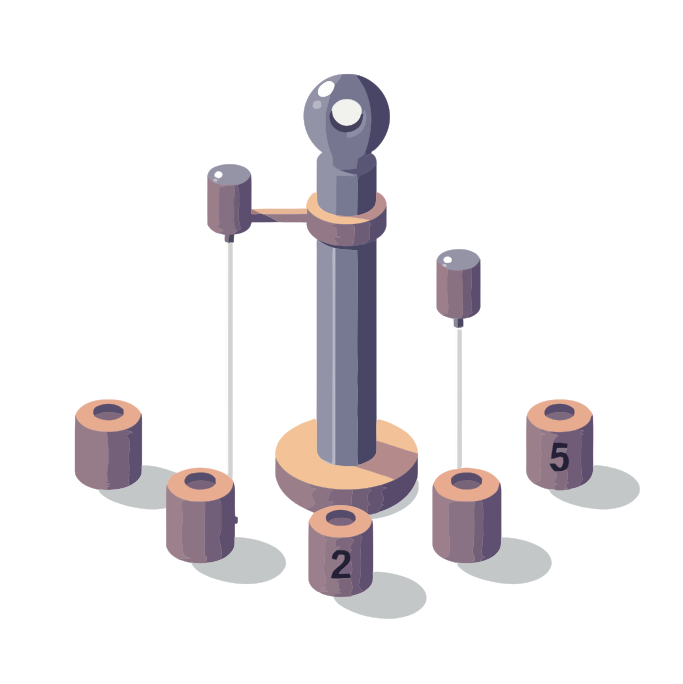
The peg system is a powerful memory technique that assigns mental images to numbers, allowing you to link new information to those visuals. First, you memorize a set of number-associated pegs—like 1 is a sun, 2 is a shoe, 3 is a tree—and then “hang” new items on those pegs with creative visualizations.
For instance, if you need to remember a list and your first item is carrots, you could imagine a sun made out of bright orange carrots. For number two, you might picture a shoe filled with toothpaste. This visualization helps reinforce the link between the number and the item.
The peg system is especially effective for remembering numbered lists in a precise order, such as speech points, procedures, or product features. It’s also useful when recalling quiz answers or instructions where sequence matters. While it requires a bit of upfront memorization, it quickly becomes second nature with use.
7. Storytelling – Building Narratives Around Information
Humans are naturally wired to remember stories better than isolated facts. That’s why storytelling as a memory strategy is incredibly effective. Instead of memorizing disconnected data, you create a narrative that links the elements together in a sequence with a beginning, middle, and end.
Imagine you need to remember a list: pencil, key, apple, balloon. You could construct a short story like this: A giant pencil opens a door with a golden key, revealing an apple floating inside a balloon. The more whimsical or emotional the story, the better your recall.
This method is highly useful for people who enjoy writing or have strong verbal intelligence. It can be applied to everyday memory challenges like remembering client details, errands, historical dates, or even facts for exams. It transforms mundane content into engaging, memorable content by activating the brain’s narrative centers.
6. Acronyms and Acrostics – Verbal Shortcuts
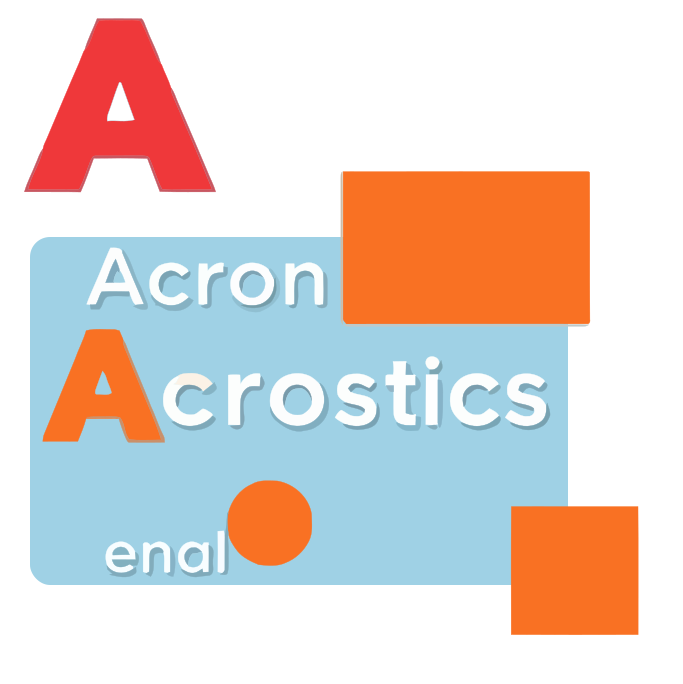
Creating acronyms and acrostics is a clever way to remember lists, sequences, or key terms. An acronym uses the first letters of a group of words to form a new, easily remembered word. An acrostic turns those letters into a sentence or phrase. For example, “ROYGBIV” is a common acronym for remembering the colors of the rainbow, while “Every Good Boy Deserves Fudge” helps students remember musical notes on a staff.
This technique is particularly handy for memory retention in academic or workplace environments, where you’re required to recall detailed processes or lists. You can also apply it in everyday tasks—like remembering ingredients, travel essentials, or safety protocols.
The simplicity and adaptability of this method make it a popular go-to for both students and professionals. It’s also a great collaborative tool when teaching or learning in group settings because acronyms and rhymes can be created together for shared memory benefit.
5. Association – Linking the Known with the New
At its core, association is about connecting new information with something you already know. This could be a personal experience, a familiar face, a song lyric, or even a rhyme. By building a bridge between the familiar and the unfamiliar, your brain can encode new data more effectively and retrieve it faster.
Let’s say you meet someone named Rose. You might picture them holding a rose or standing in a rose garden. If you're trying to remember a fact about history, associate it with a time period you already know well or a historical figure you like. These mental anchors strengthen your ability to recall the new detail later.
This relational memory technique for everyday situations is useful for remembering names, faces, places, and facts. It’s especially powerful when the connection is personal or emotionally meaningful because those memories tend to last longer and resist forgetting.
4. Visualization – Turning Data into Pictures
The brain loves pictures. Visualization is a memory technique that involves turning words or abstract ideas into vivid mental images, which are far easier to remember than raw data. This method works exceptionally well for recalling lists, names, or instructions by associating them with striking, often exaggerated visuals.
For example, if you need to remember to buy eggs, milk, and detergent, you might visualize a giant egg balancing on a milk bottle, which then topples into a foamy wave of soap bubbles. The more outlandish the image, the better your mind retains it. This kind of exaggerated mental imagery is what makes visualization one of the most effective creative memory strategies for daily recall.
You can use this technique to remember routes, to-do lists, dates, or instructions at work. It’s also especially helpful for learning new vocabulary in a foreign language by linking the sound of a word to a silly or symbolic picture. Visualization transforms boring facts into unforgettable scenes.
3. Spaced Repetition – Mastery Through Timing
Spaced repetition is one of the most powerful tools for long-term memory retention, especially for learning new concepts or vocabulary. The method involves reviewing information at increasing intervals—first after a day, then a few days later, then weekly, and so on. This approach leverages the psychological spacing effect, which shows that humans remember information better when it’s reviewed periodically over time rather than all at once.
Apps like Anki and Quizlet use spaced repetition algorithms, but you can also apply this method manually. For example, if you meet someone new and want to remember their name, mentally review it several times throughout the week. Or if you’re preparing for a work presentation, start rehearsing the key points days in advance with spaced reviews.
This time-based memory technique helps transfer information from short-term to long-term storage, making it ideal for students, language learners, or professionals needing to retain large volumes of information with minimal effort. By spacing out reviews, you make each recall more challenging—which strengthens the neural pathways involved.
2. Chunking – Organizing Information into Groups
Chunking information into meaningful groups is a technique widely used by memory champions and educators alike. Instead of trying to remember a long string of numbers or details, your brain works better when it can group them into chunks that are easier to handle. A classic example is remembering a phone number. It’s easier to recall 800-555-1234 than 8005551234.
In daily life, chunking can be used for anything from remembering a grocery list to memorizing steps in a process. For instance, if you need to buy ten items from the store, divide them into categories such as fruits, snacks, and cleaning supplies. You’ll retain them more efficiently because your brain processes grouped data faster than unrelated fragments.
This everyday memory technique is particularly useful for students studying formulas, employees learning new procedures, or anyone who frequently juggles multiple types of information. It transforms complex data into smaller, more manageable units, greatly improving recall speed and accuracy.
1. The Method of Loci – A Mental Walkthrough
One of the oldest and most powerful memory techniques used by ancient orators, the Method of Loci involves mentally placing the information you want to remember along a familiar route or within a known space. Also known as the memory palace technique, it works by linking data to visual and spatial locations that you can mentally walk through whenever you need to recall it.
This strategy works so well because the human brain is exceptionally good at remembering physical spaces. By associating abstract ideas with specific spots—like placing a shopping list item in the living room of your childhood home—you turn intangible data into something concrete and navigable. For example, if you’re preparing a speech or trying to memorize a list, you can assign each point to a room in your house and then mentally tour the house to retrieve the details.
For everyday use, the Method of Loci is highly effective for recalling presentations, directions, passwords, or sequential data. It taps into your spatial memory and visual imagination, making retention both more fun and more reliable.
Final Thoughts
Strengthening your memory doesn't require extraordinary talent—it requires practical techniques, consistent application, and a bit of creativity. The top 10 memory strategies for daily use outlined in this guide provide a toolkit that anyone can use to boost recall, sharpen focus, and build mental clarity. Whether you're preparing for an important meeting, learning a new language, or simply trying to stay organized in your day-to-day life, these methods offer accessible solutions that deliver lasting results.
What sets these techniques apart is their adaptability. You don’t need fancy software or a neuroscience degree to make them work. You just need to understand how your mind prefers to absorb and retrieve information. From spatial visualization to verbal cues, from spaced repetition to nighttime review, these tools help make information memorable and retrievable exactly when you need it most.
Incorporating these practical memory techniques into your routine won’t just help you remember more—it will also make you more confident, productive, and mentally agile. In a world where attention spans are shrinking and distractions are growing, a trained memory is one of the most valuable assets you can build. Start practicing today and unlock the full potential of your mind.
Join thousands of readers who get the best Top 10 lists delivered directly to their inbox every week. Stay updated on trending topics, expert picks, and exclusive insights.